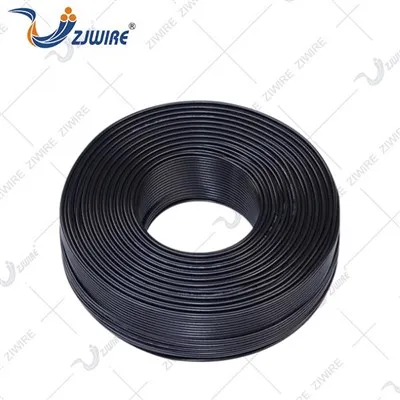

YJY and YJV cables-they only have one letter different, but man, their prices can be way off. Ever wondered why that is? Both are super common for power transmission in engineering and construction work, but you can't just swap one for the other. Let's break down their main differences-from the materials they're made of to how they perform-with some info from Zhejiang Zhongjing Wire and Cable Co., Ltd.
YJY is short for cross-linked polyethylene (XLPE) insulated, polyethylene (PE) sheathed power cable. These things are pretty impressive-they've got top-notch thermomechanical performance, good flame retardancy, and they can carry more current than regular YJV cables. They also have better electrical properties and can handle more heat. The "YJ" part stands for XLPE insulation, and that second "Y" is for PE sheathing. YJY cables work well if you're installing them indoors, running them through conduits, or laying them in loose soil-but you can't put tension on them or press down hard on them. You'll see them in power distribution networks and industrial setups that handle 1 to 1000kV or more-like power stations, city lighting systems, high-voltage tower transmissions, and basement power lines.
YJV cables, though, are XLPE insulated and use polyvinyl chloride (PVC) for sheathing. Again, "YJ" means XLPE insulation, and "V" is for PVC sheathing. One thing to note: YJV specifically refers to copper-core cables. If it's an aluminum-core one, that's called YJLV instead.
Performance: YJY is better than YJV when it comes to water resistance and handling low temperatures, but YJV is stronger when it comes to flame retardancy. The conductor in YJY can handle a maximum rated operating temperature of 90℃-higher than standard PE-insulated cables-and that helps it carry more current. If there's a short circuit, the conductor can handle up to 250℃, but only for a max of 5 seconds. YJV cables, on the other hand, have great thermomechanical stability, really good electrical performance, and they can resist chemical corrosion. They're also light, have a simple design, and you don't have to worry about limits on how steep the laying gradient is-so they're used a lot in city power grids, mines, and factories.
Sheath Materials: This is a big one. YJV uses PVC for its sheath, and PVC has halogens in it. YJY uses PE for its sheath, which means it's a halogen-free option.
Pricing: YJY cables cost more-and here's the reason: the PE sheathing material they use is more expensive than the PVC in YJV cables. Since both use XLPE for insulation, the main thing that drives up the cost is the sheath material. PE has better properties-like being more durable and better for the environment-but that means it costs more to make, and that extra cost ends up in the retail price.